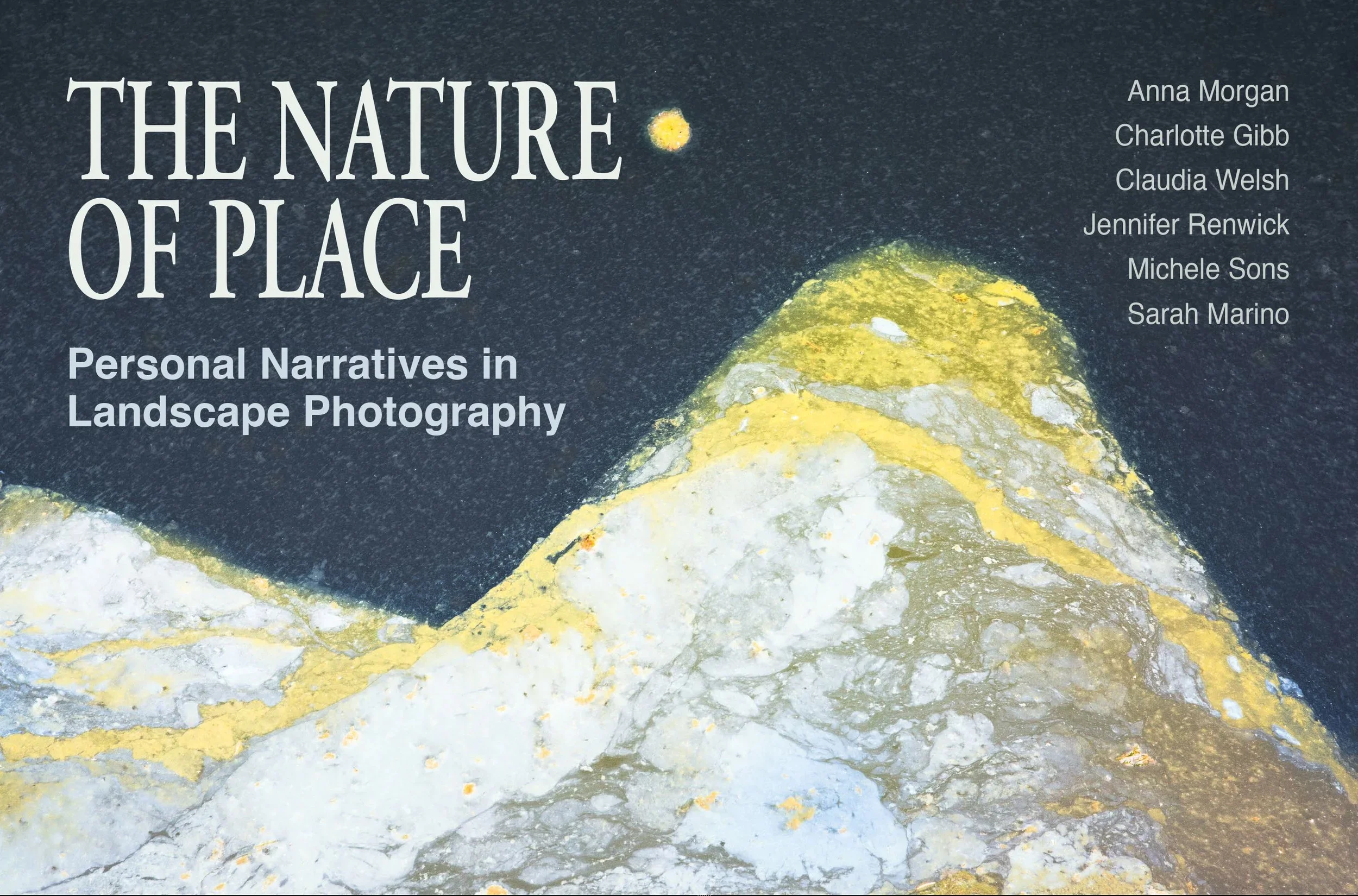
Circle of Light Reflects: Jennifer Renwick on Yellowstone National Park
In this series of blog posts celebrating the upcoming release of The Nature of Place: Personal Narratives in Landscape Photography, “Circle of Light Reflects” poses the same six questions to all members of Circle of Light. These six questions are intended to explore the nature of our individual connections with a place that resonates with each of with us in our photographic practice. In this installment, Jennifer shares her connection with Yellowstone National Park.
1. What would you consider your home place in terms of your photography practice?
Think beyond where you were born or where you live to a place where something in you settles. It might be somewhere you return to often, or somewhere you visited only once but have never quite left.
Over the years, even before photography, there have been places that kept me curious and drew me back. Two stand out in my photographic life: Yellowstone National Park in Wyoming and Death Valley National Park in California. It’s almost impossible to choose between them, as both feel like home to me, not just photographically, but spiritually as well. However, Yellowstone has played a large part in my photographic journey, and my relationship with Yellowstone stretches back decades, long before I picked up a camera. The landscapes of Yellowstone feel primal and otherworldly, and when I’m exploring and photographing in the park, I feel like I’m wandering across another planet’s landscape. It is a place that feels so wild and speaks to me on a visceral level. The features change and shift over time, sometimes even season to season, so familiar areas can look very different each time I return and walk the boardwalks.
I am always drawn to landscapes that stir something in me. In Yellowstone, I am reminded that the Earth is alive, and to find a landscape where you can witness that up close and personal, in real time, is an extraordinary experience. With more than 10,000 hydrothermal features set within these wild landscapes, it offers endless opportunities to observe and photograph scenes that continue to surprise me, even after many visits each year.
2. What first called you to this place, and has that call changed over time?
Was it light? Silence? Something harder to name? And if you now know it more deeply, do you come for the same reasons or has the relationship quietly shifted into something else?
I first visited Yellowstone on a college geology trip. Our class had some downtime, and we stayed in the cabins near Old Faithful. I will never forget seeing that geyser erupt for the first time. I was completely spellbound watching the steam and water rise, and it was unlike anything I had ever seen before. Since we were staying next door in the cabins, I found myself returning for every eruption I could, even the ones in the middle of the night, because I could not get enough of the experience. I would sit on the benches, transfixed, watching the Earth “breathe” so to speak, right in front of me. For the first time, it was not something I was reading about in a classroom textbook, but something I could witness and experience in real time.
I fell in love with Yellowstone during that visit and promised myself I would return soon. I'm very grateful for the many opportunities I've had to return, and now, to photograph its landscapes. It is also where I found my voice photographing natural abstracts. I released my first photography project after an epiphany while sitting on a bench along a geyser basin boardwalk. In that quiet moment, I realized that creating those abstract images was what truly made me happy with my camera. I am still as amazed by Yellowstone today as I was twenty years ago. Each visit feels like coming home. I have grown so familiar with the thermal features that returning to them feels like visiting old friends. Every trip reveals new images, keeps my curiosity alive, and leaves me excited to return.
3. Describe this place using only those details a camera cannot capture.
Think of sound, smell, temperature, the particular quality of the air, or that feeling in your body when you arrive. What is present there that never makes it into the frame?
Yellowstone is a dynamic landscape and one of the few places in the world I can experience the Earth “breathing” through its hydrothermal features. The lodgepole pines and surrounding mountains are punctuated by geyser basins and rising steam. Some of these basins contain the most colorful springs and bacterial mats, shining like bright jewels across the landscape. Yellowstone is one of the rare places I visit where I feel truly in a wild and untamed environment. It feels as if I am transported to another world, or perhaps even back in geologic time, witnessing the Earth as it was forming. The mornings are quiet and warm with steam, and as I photograph the landscape, I occasionally hear the howls of wolves or the call of a crane in the distance, adding to the sense of wilderness. I can also smell the sulfur in the air, as further proof that the Earth is alive and exhaling. The vast expanse of lodgepole pines, rushing rivers and waterfalls, deep canyons cutting through the terrain, lush valleys filled with wildlife, and the otherworldly hydrothermal features all come together to create a landscape that engages not just my eyes but all my senses, offering a full and unforgettable experience.
4. Choose one image from this place to share.
Think beyond your finest technical work, or your most awarded. Choose the image that is most true, the one that comes closest to why you keep returning to your home place.
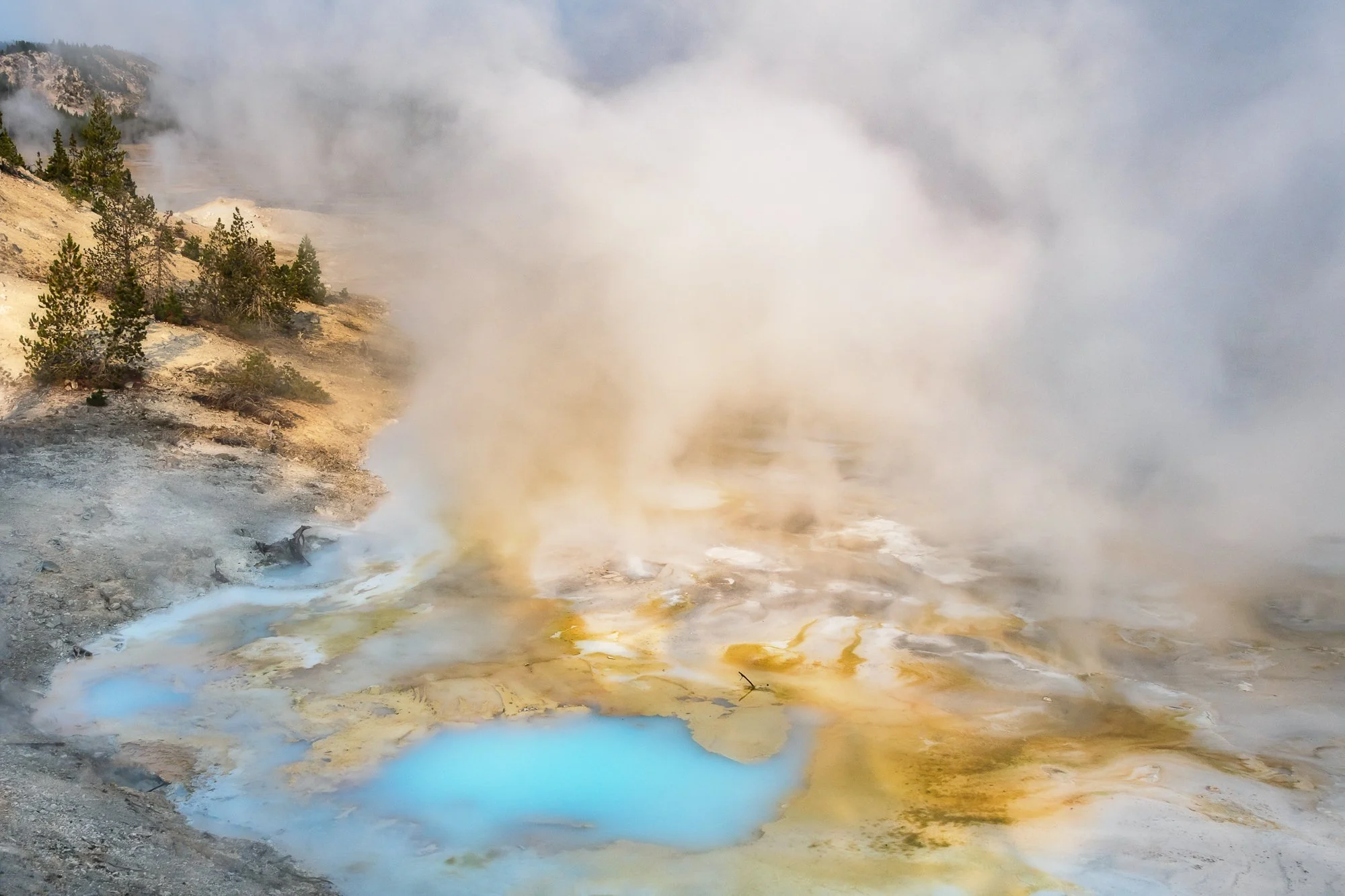
This image was one of the earliest photographs I captured when I began photographing Yellowstone. It shows Porcelain Basin, located in Norris Geyser Basin, which has become my favorite geothermal landscape to photograph. Porcelain Basin is the hottest and most acidic basin in the park, and its colors and features shift slightly with each season, making it fascinating to revisit. On this particular morning, the basin was bathed in the warm light of the rising sun, and I loved how the steam and the landscape came together to create a beautiful, fleeting moment in one of my favorite places.
5. What have you learned about yourself through this place?
Places are mirrors as much as subjects. What has this landscape shown you about your own interior terrain—your fears, your longings, your way of seeing?
Yellowstone taught me one of the most important lessons during my photography journey: that the photographs I cared about most were the ones that felt personal to me. In those early visits where I wandered with my camera, I found myself drawn to smaller scenes and abstract moments within the chaos of the geothermal landscape. They were not always the obvious or expected subjects, and for a while I questioned whether they were worth pursuing. But the more time I spent there, the more I realized that those were the images I was most connected to. They connected me back to my love of geology, and they were very enriching to me to explore and photograph. That realization slowly shifted my focus away from what I thought I should be photographing and toward what I genuinely loved.
In that way, Yellowstone gave me the freedom to be myself as a photographer. It helped me let go of the idea that I needed to create images for anyone else’s expectations or approval. Instead, I began to trust my instincts and follow what felt meaningful to me, even if it did not fit into a familiar mold. That shift was profound, and it changed how I approached not just Yellowstone, but every landscape I have visited since.
6. What is one lesson you will take away from one of the essays in The Nature of Place?
In what way has this ebook provoked thought in terms of your photography practice? Will this lesson lead to any change in your philosophy or approach going forward?
I’ve been so inspired by each essay, and I plan to carry many of their pearls of wisdom into my own photographic practice. One lesson that stood out to me from Michele’s essay is the idea that a connection to place takes time and can evolve. While I’ve learned to appreciate this in the landscapes I often visit and photograph, I sometimes struggle to connect with unfamiliar ones. Her insight will encourage me to be patient with new environments, trusting that connection and inspiration will grow as I continue to engage with them. I often feel overwhelmed when visiting a new place, and I find I get frustrated if I don’t feel an immediate connection. Michele’s words will inspire me to approach these experiences with openness and patience rather than discouragement.