Circle of Light Reflects: Michele Sons on Cades Cove
In this series of blog posts celebrating the upcoming release of The Nature of Place: Personal Narratives in Landscape Photography, “Circle of Light Reflects” poses the same six questions to all members of Circle of Light. These six questions are intended to explore the nature of our individual connections with a place that resonates with each of with us in our photographic practice. In this installment, Michele starts us off by sharing her connection with Cades Cove in Great Smoky Mountains National Park.
1. What would you consider your home place in terms of your photography practice?
Think beyond where you were born or where you live to a place where something in you settles. It might be somewhere you return to often, or somewhere you visited only once but have never quite left.
Cades Cove sits in the heart of Great Smoky Mountains National Park, a small formerly settled valley cradled so completely by the surrounding ridges that it somehow feels as though it exists apart from the rest of the world. I first heard of it from someone I loved, who described it as a place where the wildlife had no fear of humans, where deer and bear moved through the open meadows with an ease that felt almost mythological. That image stayed with me for twenty years before I finally made my way there in 2011. The animals I encountered were indeed close and unhurried, just as my friend promised. But it was the land itself that captured my imagination—the vast, encircling ridges safely holding the small valley like cupped hands, and the fog moving across the valley floor in slow, dream-like drifts. It’s a place I can’t help but imagine myself living in.
2. What first called you to this place, and has that call changed over time?
Was it light? Silence? Something harder to name? And if you now know it more deeply, do you come for the same reasons or has the relationship quietly shifted into something else?
I came for the animals. I returned for something I didn't have a word for yet—the particular way the landscape holds itself, safe, contained and unhurried, indifferent to everything outside its encircling ridges. What calls me back today is something I can only call recognition. The place feels familiar in a way that has nothing to do with frequency of visit. A sense of home is something I spent a lifetime without, but in this place it has grown through the years, to become what is today a very real and powerful sense of belonging.
3. Describe this place using only those details a camera cannot capture.
Think of sound, smell, temperature, the particular quality of the air, or that feeling in your body when you arrive. What is present there that never makes it into the frame?
At sunrise or perhaps just before, Cades Cove smells of cold, damp earth and dewy meadow grass, with something older underneath—woodsmoke and timber from the homesteads—as though the history of the place has worked its way into the soil. Even with my eyes closed, I can feel the presence of the ridges, a circular vibration, a walls-of-a-room sensation that is more reassuring than confining. And when the birdsong begins, tentatively at first, and the fog stirs, something in me stirs with it.
4. Choose one image from this place to share.
Think beyond your finest technical work, or your most awarded. Choose the image that is most true, the one that comes closest to why you keep returning to your home place.
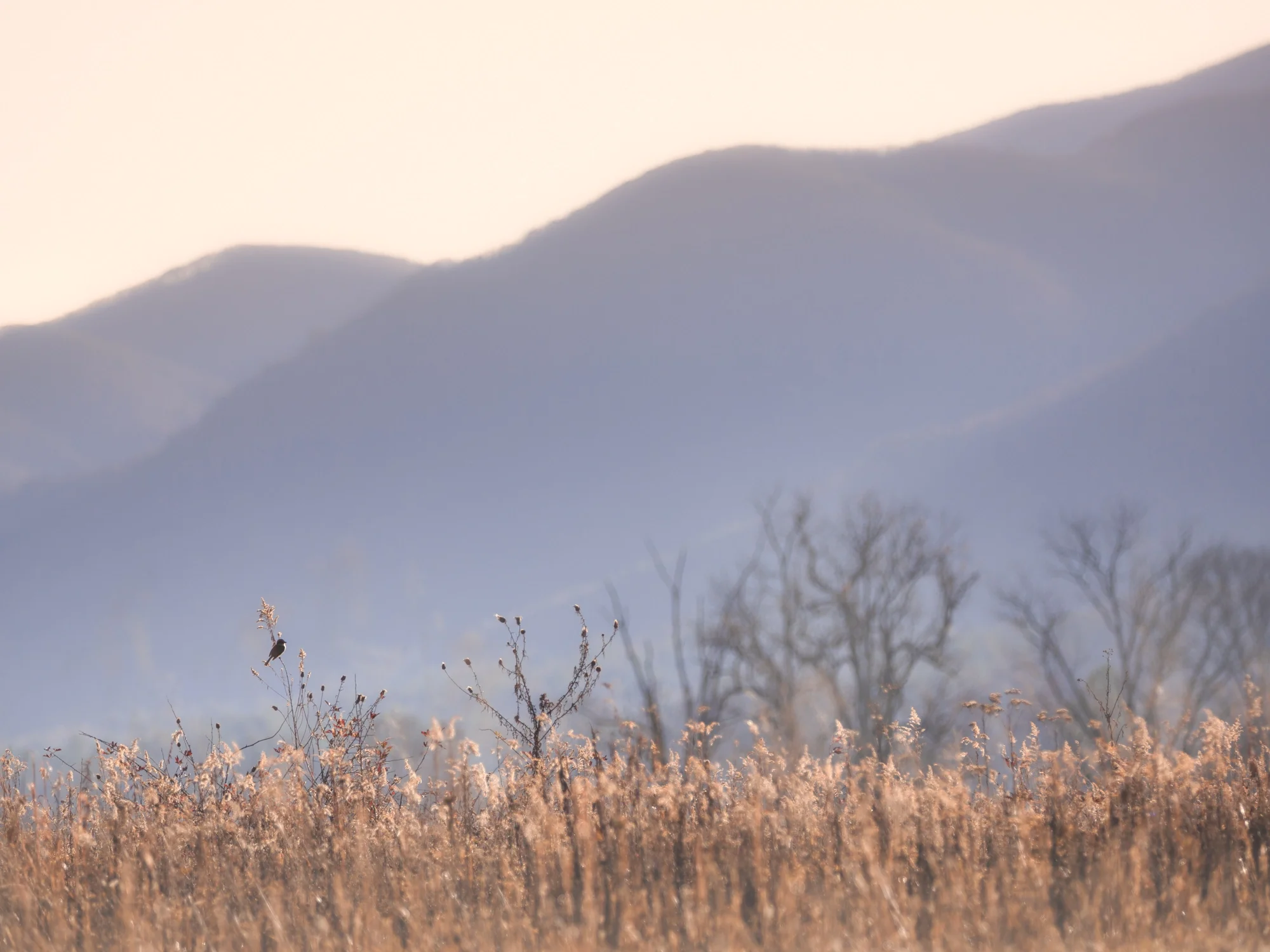
Bird, meadow, mountains. Cades Cove, Great Smoky Mountains National Park, TN
5. What have you learned about yourself through this place?
Places are mirrors as much as subjects. What has this landscape shown you about your own interior terrain—your fears, your longings, your way of seeing?
Cades Cove has taught me that I am drawn less to spectacle and more to resonance—to landscapes that wrap around me rather than open wide. The ridges that ring the valley are not dramatic in the way of the high peaks or sweeping vistas of the West; rather, they are steady, patient, enduring. I think I needed to stand inside that particular kind of geography to understand that this was what I had been looking for all along, in Appalachia and elsewhere—not the sublime, but the held.
6. What is one lesson you will take away from one of the essays in The Nature of Place?
In what way has this ebook provoked thought in terms of your photography practice? Will this lesson lead to any change in your philosophy or approach going forward?
One question surfaced in my reading of Sarah’s essay with regard to the concept of reciprocity that I am still sitting with: What does reciprocity look like between a photographer and the places she photographs (or chooses not to photograph)? For years I photographed a severely impacted place without questioning the origins of the damage—drawn, as so many photographers are, to just the appearance of it. Eventually, I learned the cause of the damage, and that what I had been aestheticizing was in fact environmental devastation, and that knowledge changed something in me permanently. I have not returned since 2018. But Sarah’s essay and my subsequent dialogue with Anna pressed me further, past the decision to simply walk away once I understood, toward a harder question: Is absence appropriate? Or does reciprocity demand something more active—a willingness to return, not for the image, but for the story, to pair the photograph with its true history and refuse to let beauty obscure harm? I don't have clean answers. But I think the asking of it will quietly reshape how I work going forward, making me more accountable to the places that have been generous enough to claim me, and more honest about the ones that carry wounds I once mistook for wonder.